

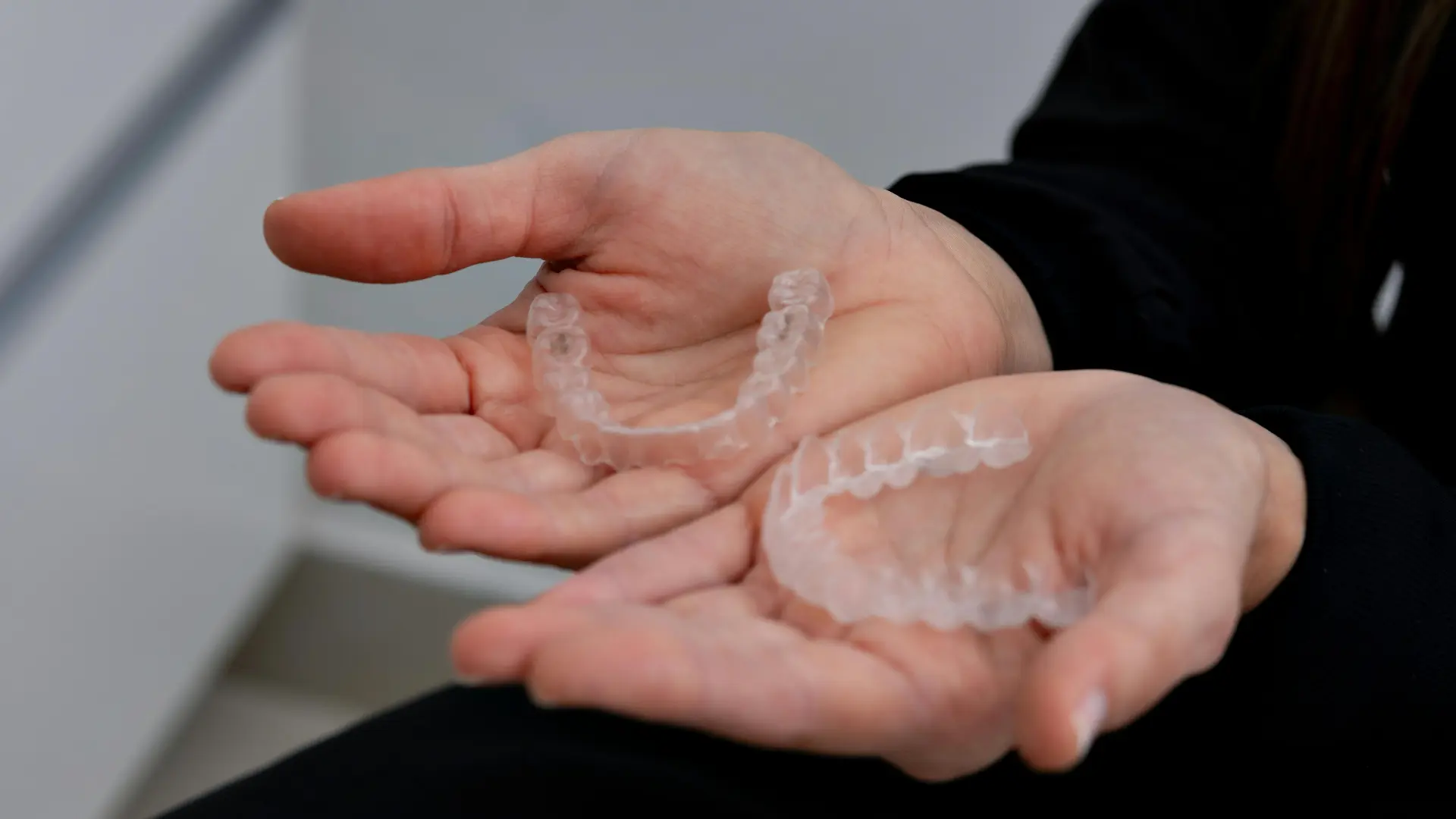
Invisalign is recommended for mild to moderate teeth crowding because it uses custom-made clear aligners to gradually reposition teeth without traditional braces. When supported by digital planning and patient compliance, Invisalign can effectively improve alignment, smile aesthetics, and oral hygiene within a predictable treatment timeline.
What Is Invisalign Treatment?
Invisalign is a clear aligner orthodontic system designed to straighten teeth using a series of removable, transparent trays. Each aligner applies controlled pressure to gradually shift teeth into proper alignment.
It involves:
What Is Mild Crowding?
Mild crowding occurs when there is insufficient space in the dental arch, causing teeth to overlap or rotate slightly.
Common signs include:
Patient Profile Overview
The patient reported aesthetic concerns affecting professional and social confidence.
Diagnostic Assessment
The evaluation included:
- Clinical examination
- Digital intraoral scanning
- Occlusal (bite) assessment
Clinical Findings
- Mild crowding in upper incisors
- Class I molar relationship
- No skeletal discrepancies
- Good oral hygiene
Why Invisalign Was Recommended
Invisalign was selected because:
Predictable Results
Mild to moderate crowding responds predictably to clear aligner therapy.
Aesthetic
Clear aligners are less visible than braces.
Hygiene-Friendly
Removability supports thorough oral hygiene maintenance.
Digital Precision
Digital planning improves treatment accuracy and efficiency.
Treatment Plan Overview

Accurate mapping of current tooth positions.
Digital preview of planned tooth movement.
Series of aligners designed for progressive correction.
Regular follow-ups to track movement.
Estimated Duration: 8–10 months
Treatment Progress Timeline
Patient adapted to aligners within a few days.
Visible improvement in alignment.
Significant reduction in crowding.
Final refinement aligners used.
Clear retainers provided to maintain results.
Patient Compliance Requirements
Successful Invisalign treatment depends on consistent wear.
Key requirements:
Typical Invisalign Duration by Case Type
| Case Severity | Typical Duration |
|---|---|
| Mild crowding | 6–10 months |
| Moderate crowding | 10–15 months |
| Minor spacing issues | 6–12 months |
| Complex bite cases | 12–18+ months |
Duration varies depending on biological response and compliance.
Benefits of Invisalign for Mild Crowding
Consistent aligner wear → Gradual tooth movement → Improved alignment → Enhanced hygiene and aesthetics
Frequently Asked Questions
Is Invisalign suitable for all alignment problems?
Invisalign is effective for mild to moderate crowding, spacing, and certain bite issues. Severe skeletal discrepancies or complex orthodontic cases may require alternative treatment options such as braces or combined approaches.
How long does Invisalign treatment take?
Treatment duration typically ranges from 6 to 18 months depending on case severity, biological response, and patient compliance. Mild crowding cases often complete within 8–10 months.
Is Invisalign painful?
Patients may experience mild pressure when switching to a new aligner. This sensation indicates tooth movement and usually subsides within a few days. Severe pain is uncommon.
Do results last permanently?
Long-term stability depends on consistent retainer use after treatment. Without retention, teeth may gradually shift back toward their original positions.
Conclusion
Invisalign offers a structured and predictable approach to correcting mild crowding in adults. Through digital planning, controlled aligner wear, and consistent follow-up, clear aligners can improve alignment while preserving aesthetics and oral hygiene. Long-term success depends on proper case selection and adherence to retainer protocols after treatment completion.