

A toothache rarely picks a convenient time to show up. It starts as a dull throb while you're eating dinner, and by midnight it's keeping you awake, pulsing with every heartbeat. If you're experiencing a Severe Toothache in Kokapet and searching for an Emergency Dentist in Kokapet right now, chances are you're already past the point of "wait and see." This guide will help you understand what your pain is telling you, when it's safe to wait for a regular appointment, and when you need to walk into a clinic today.
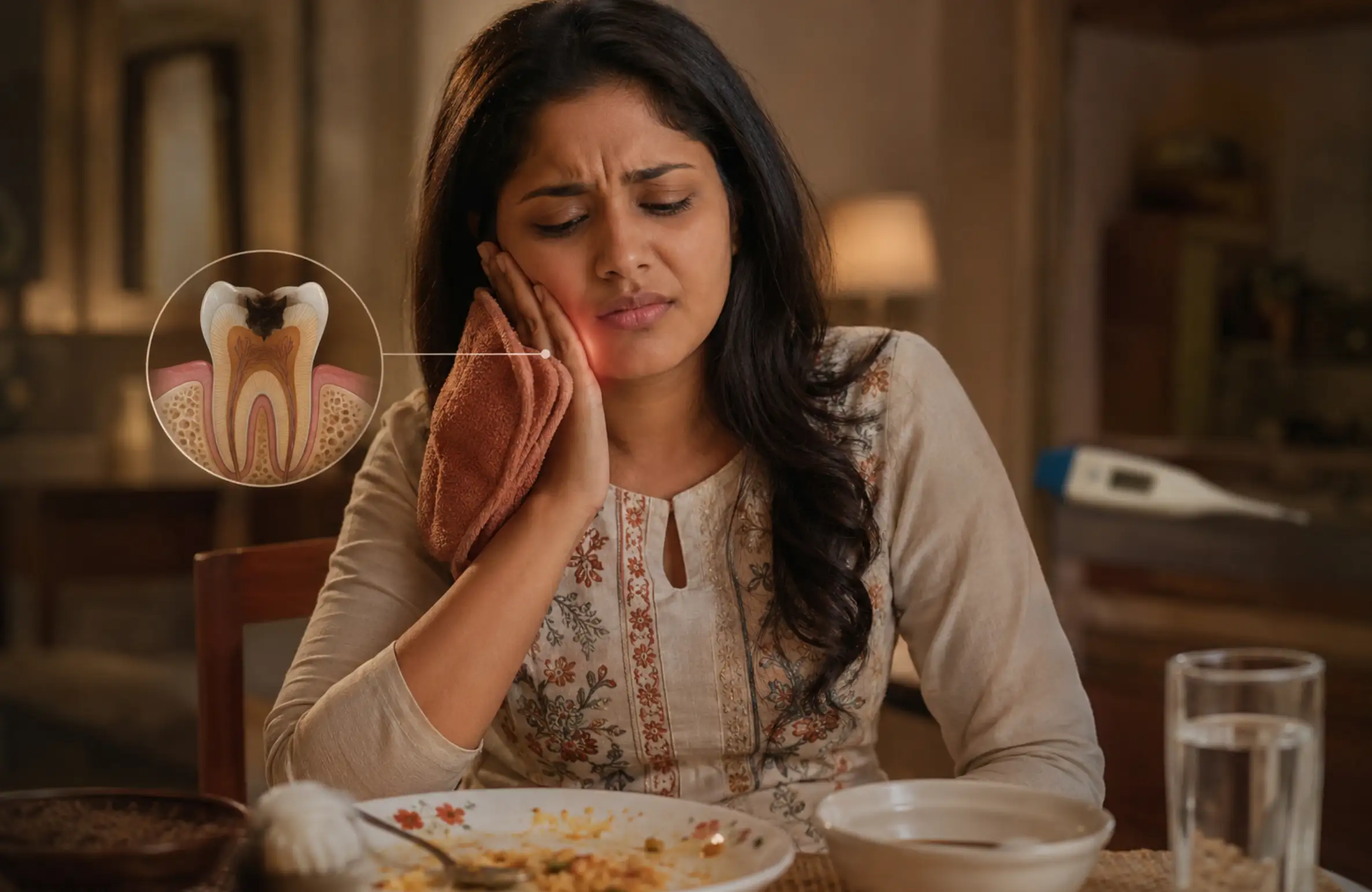
Signs Your Toothache Is a Dental Emergency
Not every toothache needs urgent care, but certain signs mean you shouldn't wait for the next available slot. Head to a dentist immediately if you notice:
- Throbbing pain that doesn't ease with painkillers — this often points to nerve involvement or infection.
- Swelling in your face, jaw, or gums, especially if it's spreading or making it hard to open your mouth.
- Fever along with tooth pain — a sign the infection may be affecting more than just the tooth.
- Pus or a bad taste near the painful tooth, which usually indicates an abscess.
- Pain that gets worse when lying down, often a sign of pressure buildup from infection.
- Difficulty swallowing or breathing — this is rare but requires immediate medical attention, not just a dental visit.
- A knocked-out, cracked, or badly chipped tooth from an accident or injury.
- Bleeding that won't stop after an injury to the mouth.
If any of these apply to you, don't wait it out with home remedies. These are the exact situations where an emergency dentist in Kokapet can prevent a small issue from turning into a much bigger, costlier one.
When It's Okay to Book a Regular Appointment
Not all tooth pain means you need to drop everything. Mild sensitivity to hot or cold that fades within a few seconds, occasional dull discomfort after eating something hard, or slight gum irritation from brushing too hard usually aren't emergencies. In these cases, it's still worth scheduling a check-up soon, but you don't need to treat it as an urgent situation.
The general rule: if pain is mild, occasional, and doesn't come with swelling, fever, or a bad taste, you likely have a day or two to book a routine visit. If it's constant, sharp, or paired with any of the warning signs above, treat it as urgent.
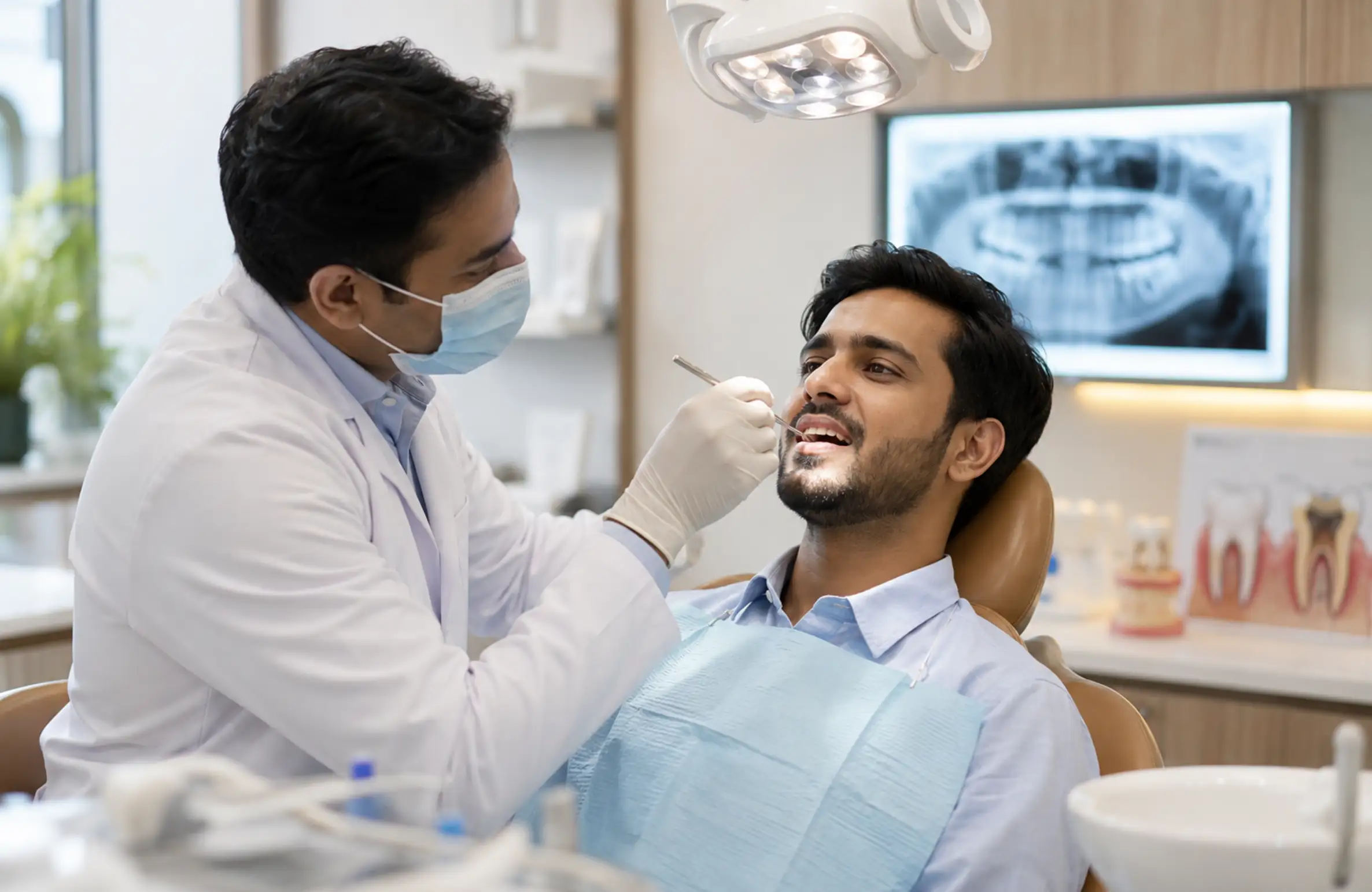
What Causes Severe Toothaches?
Understanding the root cause helps you explain your symptoms clearly when you visit the clinic. Common reasons behind severe tooth pain include:
- Deep cavities that have reached the inner pulp of the tooth, exposing nerves to bacteria and pressure.
- Cracked or fractured teeth, sometimes from biting down on something hard, which can expose the nerve even without visible damage.
- Gum infections, including periodontal abscesses that build pressure beneath the gum line.
- Wisdom tooth issues, particularly when they're impacted or partially erupted, trapping food and bacteria.
- Old fillings or crowns that have failed, allowing bacteria to seep underneath and infect the tooth.
- Sinus pressure, which can sometimes mimic tooth pain in the upper jaw, especially during weather changes.
A dentist can pinpoint the exact cause using a clinical exam and, if needed, an X-ray — something you simply can't diagnose accurately on your own.
What to Do While You Wait to See a Dentist
If you're in pain and can't get to the clinic immediately, a few steps can offer temporary relief:
- Rinse your mouth with warm salt water to reduce bacteria and ease irritation.
- Take an over-the-counter pain reliever as directed on the label.
- Apply a cold compress to the outside of your cheek if there's swelling.
- Avoid extremely hot, cold, or sugary foods that can trigger sharp pain.
- Don't place aspirin directly on the gum or tooth — it doesn't work that way and can burn the tissue.
These are stopgap measures, not solutions. They buy you time; they don't fix the underlying problem.

Why Delaying Treatment Makes Things Worse
Putting off a dental visit rarely makes a toothache disappear for good. Left untreated, an infection can spread to the jawbone, surrounding teeth, or even into the bloodstream in severe cases. What could have been a straightforward filling or root canal can turn into a tooth extraction, and what could have been a same-day fix can turn into a multi-visit treatment plan. Acting early, especially with severe or persistent pain, almost always means simpler treatment and a faster recovery.
Why Choose Core Dental Hub for Emergency Dental Care in Kokapet
At Core Dental Hub, we understand that dental pain doesn't wait for a convenient appointment slot. Our team is equipped to handle urgent cases — from severe toothaches and abscesses to broken teeth and swelling — with the care and speed such situations demand. We focus on getting you out of pain first, then walking you through a clear plan for lasting treatment.
Located right in Kokapet, our clinic is set up to see patients quickly when pain strikes, using proper diagnostic tools to identify the exact cause of your discomfort rather than guessing. Whether it's a root canal, extraction, or gum treatment, our approach is straightforward: relieve the pain, treat the cause, and help you avoid the same problem in the future.
If you're dealing with a severe toothache and searching for a reliable emergency dentist in Kokapet, don't wait for it to get worse.
- 📍 Visit us at: Plot no. 38, 3rd Floor, Brundavan Colony, BBR Avenue, Kokapet, Hyderabad, Telangana 500075
- 📞 Call us: +91 80083 93583
- ✉️ Email: coredentalhub@gmail.com
- 🌐 Website: coredentalhub.com
Final Thoughts
A severe toothache is your body asking for help, not something to push through with painkillers alone. Learning to tell the difference between mild discomfort and a true dental emergency can save you pain, time, and money. If your symptoms match any of the warning signs above, reach out to Core Dental Hub in Kokapet right away — timely treatment is almost always simpler than treatment delayed.