
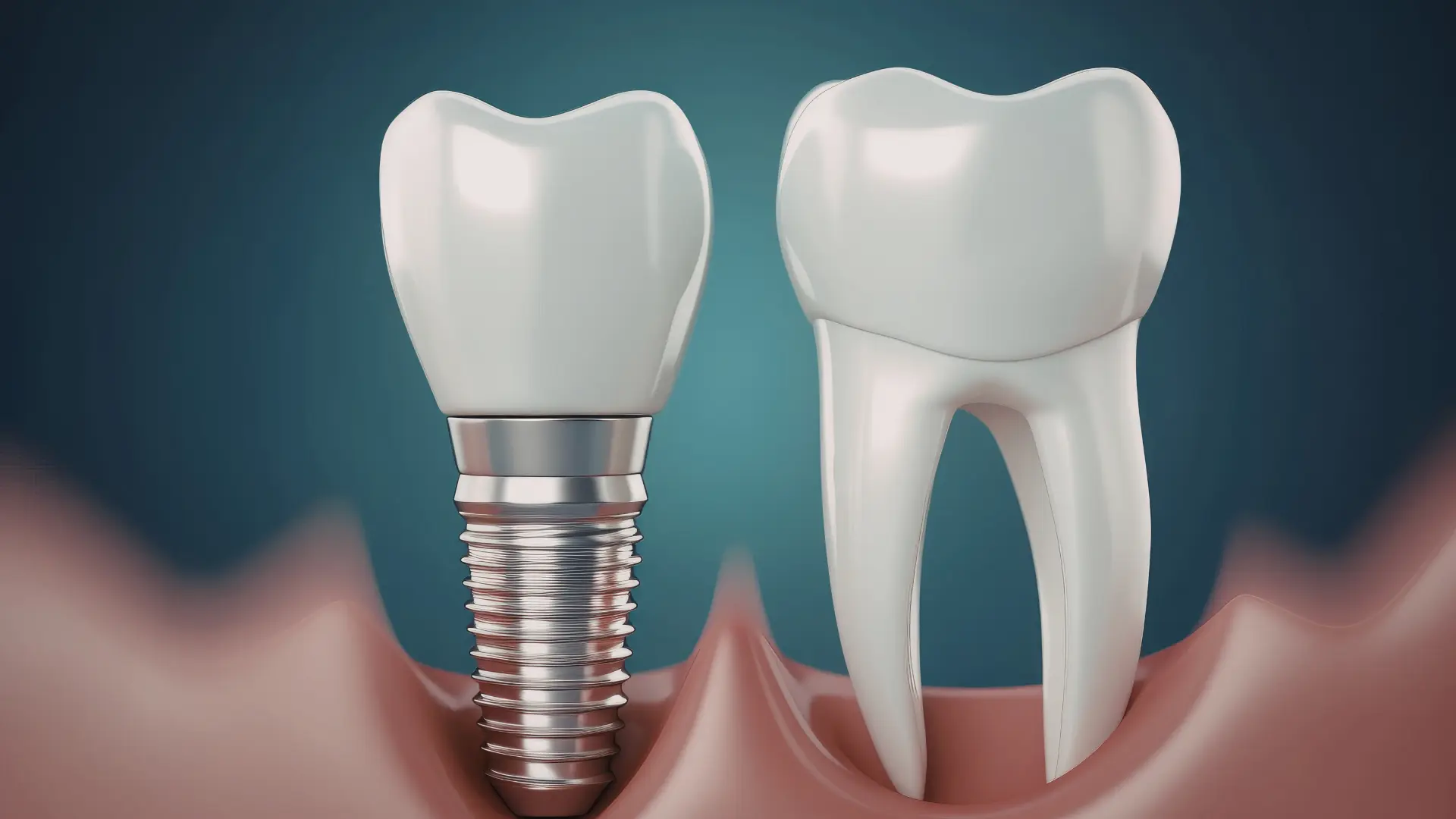
A single dental implant is recommended after tooth loss to restore chewing function, prevent adjacent teeth from shifting, and maintain jawbone density. When supported by proper diagnosis and bone evaluation, implant placement is a predictable and long-term solution for replacing a missing tooth.
What Is a Single Dental Implant?
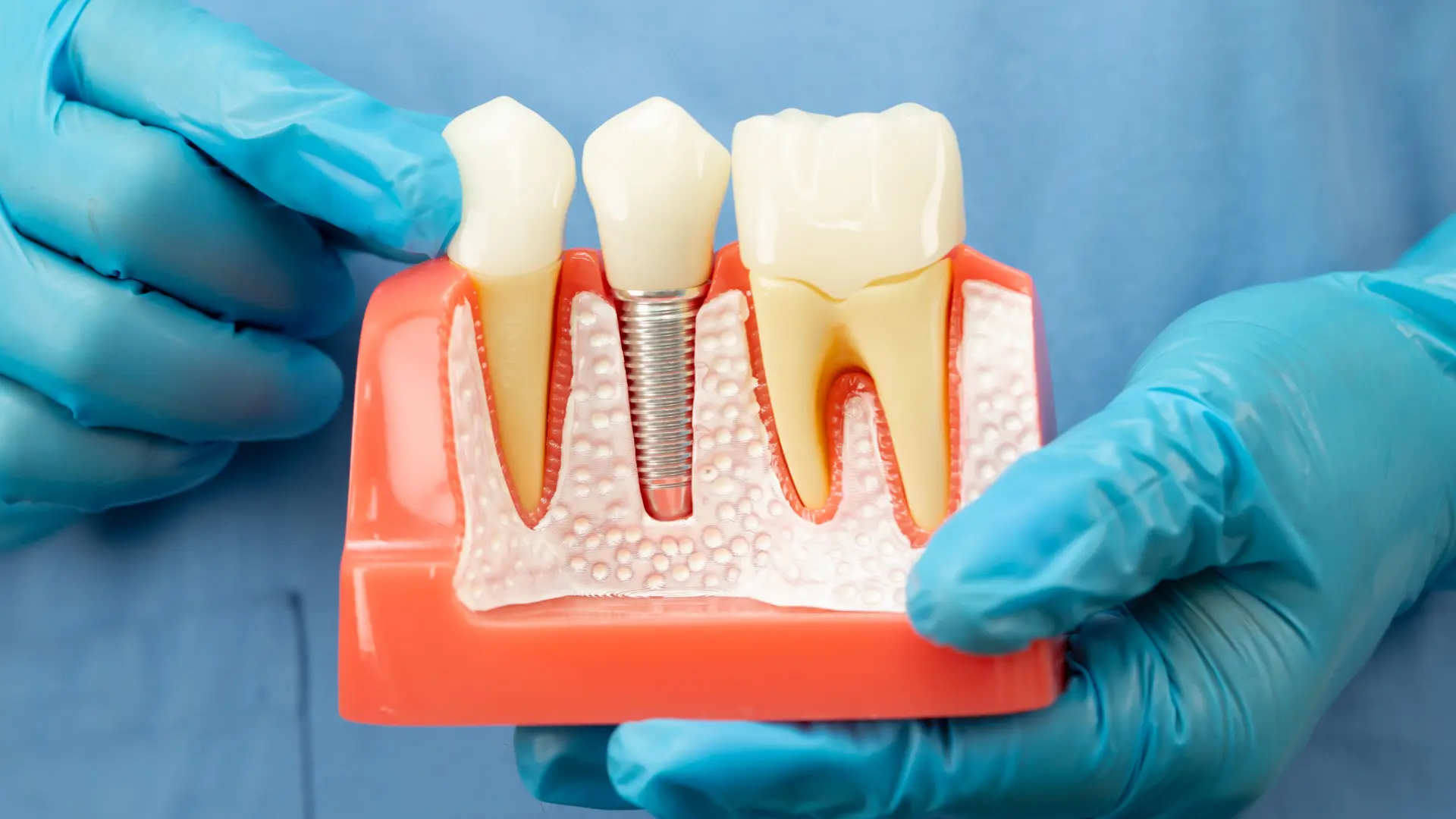
A single dental implant is a titanium fixture surgically placed into the jawbone to replace the root of a missing tooth. After healing and bone integration, a custom-made crown is attached to restore appearance and function. It consists of:
- Implant fixture (titanium post)
- Abutment (connector)
- Ceramic crown (visible tooth replacement)
Why Replacing a Missing Molar Is Important
Tooth loss affects more than appearance. It can cause:
- Shifting of adjacent teeth
- Bite imbalance
- Reduced chewing efficiency
- Progressive jawbone loss
- Food lodgment and gum irritation
Missing tooth → Uneven bite pressure → Bone resorption → Functional decline
Early replacement helps prevent these complications.
Patient Profile Overview
Reported symptoms:
- Difficulty chewing on one side
- Food impaction
- Mild shifting of nearby teeth
Diagnostic Assessment
A structured evaluation included:
- Clinical examination
- Digital intraoral imaging
- CBCT scan for bone analysis
Imaging Findings
- Single missing mandibular molar
- Mild horizontal bone reduction
- Adequate vertical bone height
- Healthy adjacent teeth
Treatment Plan Overview
Precise measurement of bone density and implant positioning.
Titanium implant placed under local anesthesia.
Osseointegration period of approximately 3–4 months for bone fusion.
Custom ceramic crown attached and bite adjusted.
Implant Procedure Details
- Duration: Approximately 60 minutes
- Anesthesia: Local anesthesia
- Immediate complications: None reported
Post-operative care included:
- Soft diet for several days
- Oral hygiene precautions
- Follow-up visit after 7 days
Mild swelling was reported during the first 48 hours and managed with standard medication.
Recovery Timeline
Swelling subsided; sutures removed.
Implant stable; no discomfort.
CBCT confirmed successful osseointegration.
Final crown placed; bite alignment adjusted.
Implant stable with healthy gum tissue.
Typical Dental Implant Longevity
| Condition | Expected Longevity |
|---|---|
| Good oral hygiene | 15–20+ years |
| Moderate hygiene with routine visits | 10–15 years |
| Poor hygiene or uncontrolled health issues | Reduced longevity |
Longevity depends on bone health, oral hygiene, and regular dental check-ups.
Benefits of Single Dental Implants
- Restores natural chewing ability
- Maintains jawbone structure
- Provides stable, fixed replacement
- Prevents bite imbalance
- Does not rely on adjacent teeth
Frequently Asked Questions
How long does a dental implant last?
Is dental implant surgery painful?
Who is eligible for a dental implant?
How long does the entire process take?
Key Clinical Takeaways
- Replacing missing teeth early reduces long-term complications.
- CBCT-guided planning improves placement precision.
- Proper case selection enhances predictability and success.
- Structured follow-up supports long-term implant stability.
Conclusion
A single dental implant is a clinically established method for restoring function after tooth loss. When supported by accurate diagnosis, proper bone assessment, and careful surgical planning, it offers a stable and long-term replacement option. Early intervention helps maintain jaw health, bite stability, and overall oral function.